
07:00-17.00 Monday to Friday | 24/7 Availability
01508 470728
01508 470728
Resource recovery • Circular economy • Cost efficiency
At North Hykeham, the project team demonstrated how effective resource recovery can deliver both significant environmental benefits and substantial commercial savings.
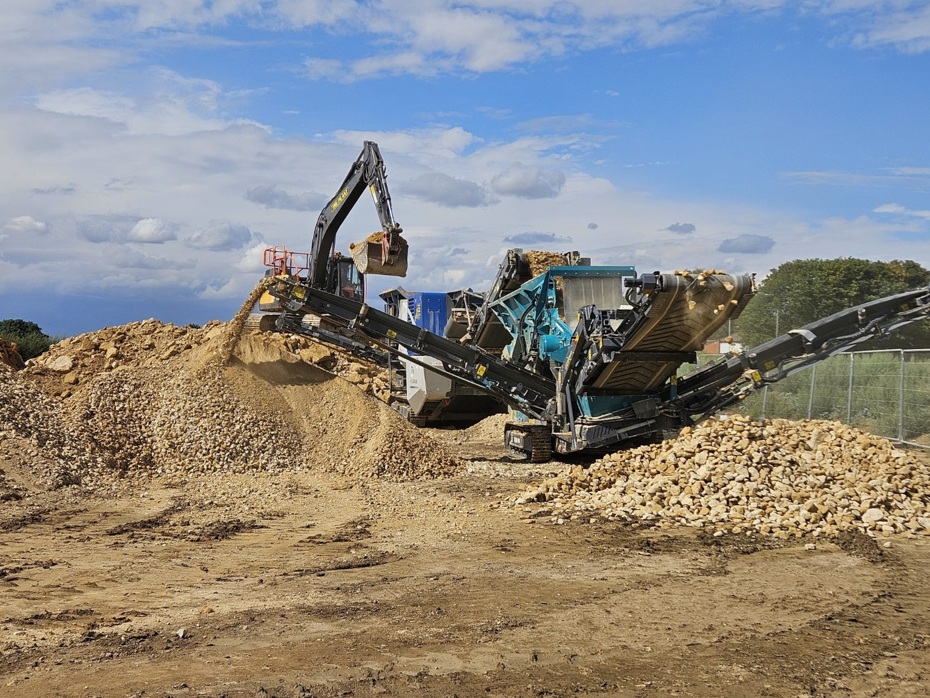
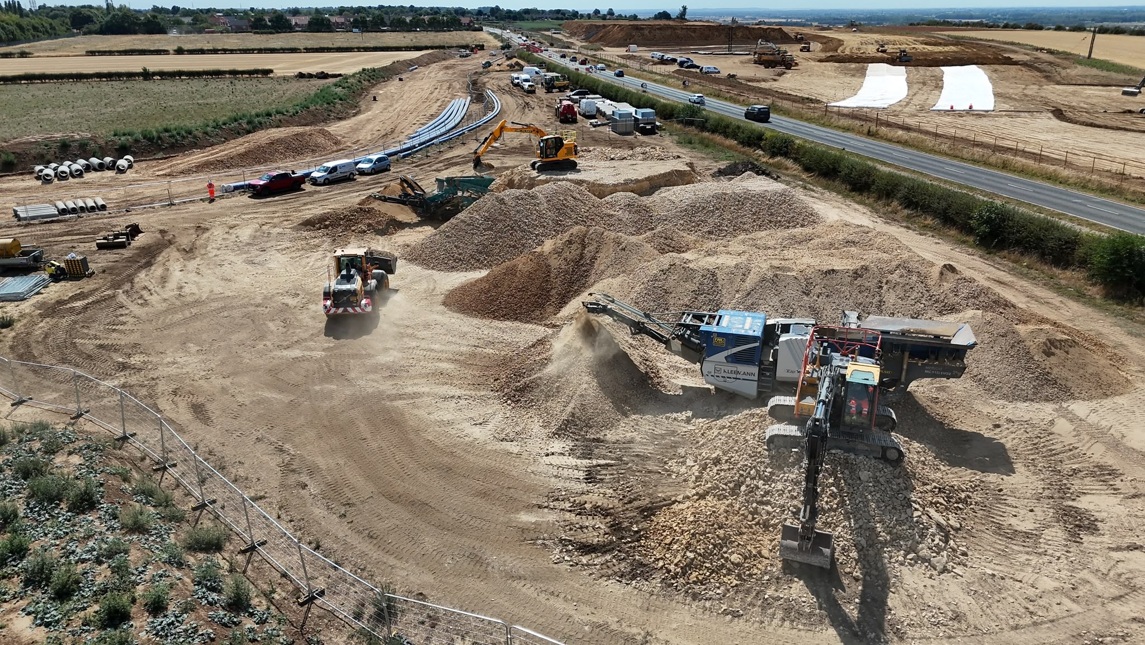
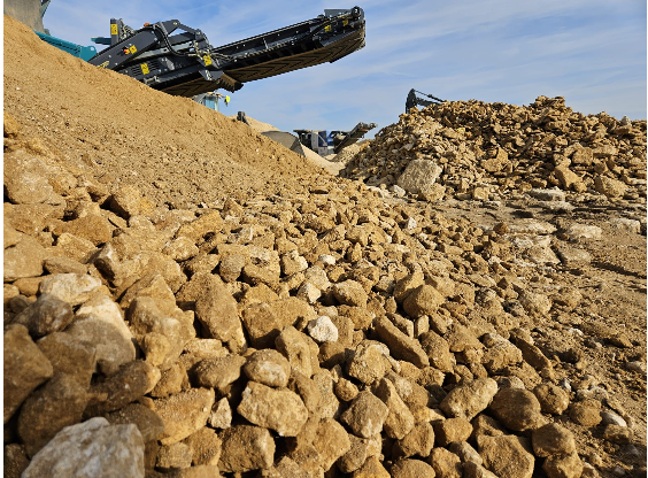
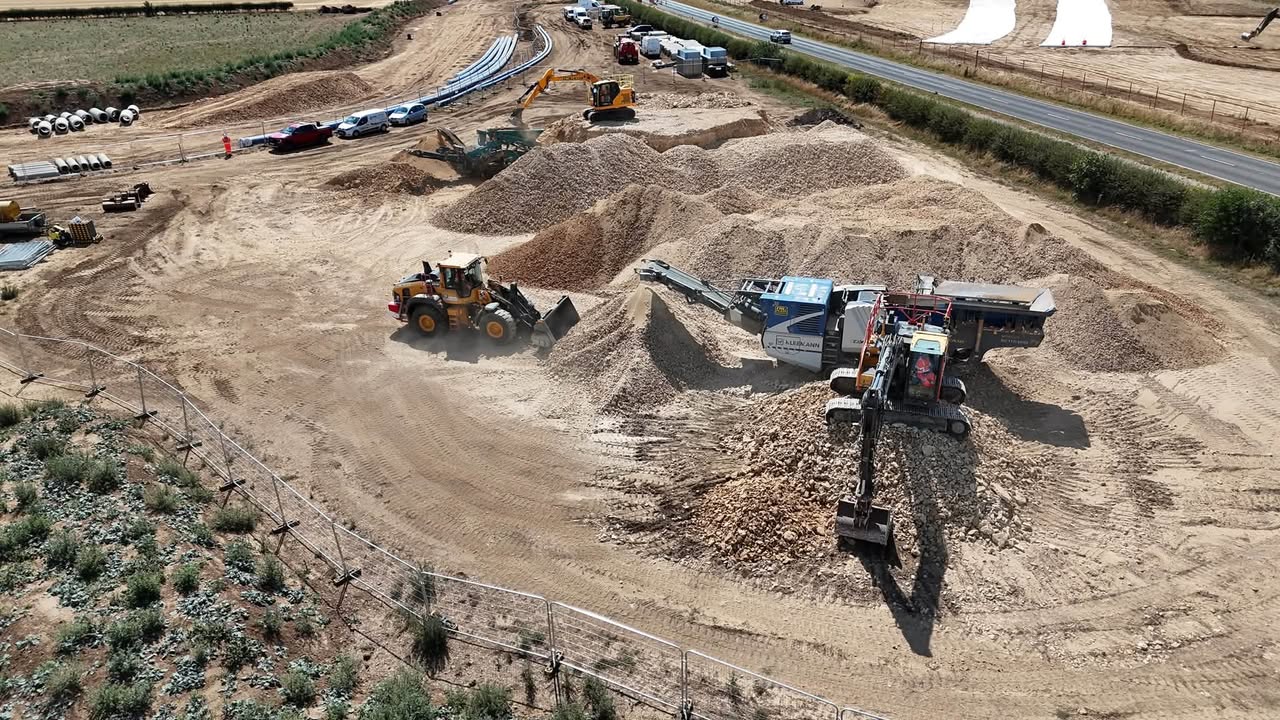
Working collaboratively with Anglian water and the site team, excavated limestone arising from construction activities was processed on site and transformed into a fully compliant construction material rather than being treated as waste.
The initiative resulted in the production of 9,200 tonnes of Type 1 aggregate, generating more than £330,000 in material cost savings for the project.
Construction projects can generate significant quantities of excavated material. Traditionally, this material may be removed from site and treated as waste, while new aggregate is subsequently purchased to meet construction requirements.
Originally the objective was to excavate 3000 tonnes but it was apparent there was further need for extension on this project. This in turn meant 9,200 tonnes of reusable material was recovered.
Being next to a main road; it was paramount that dust was kept to an absolute minimum where possible. During period of works, dust suppression monitoring plans were in place and adequate machinery used to ensure safety of the operation and levels continuously monitored.
Richardson Recycling operatives worked with the @One Alliance site team to process the excavated limestone directly on site.
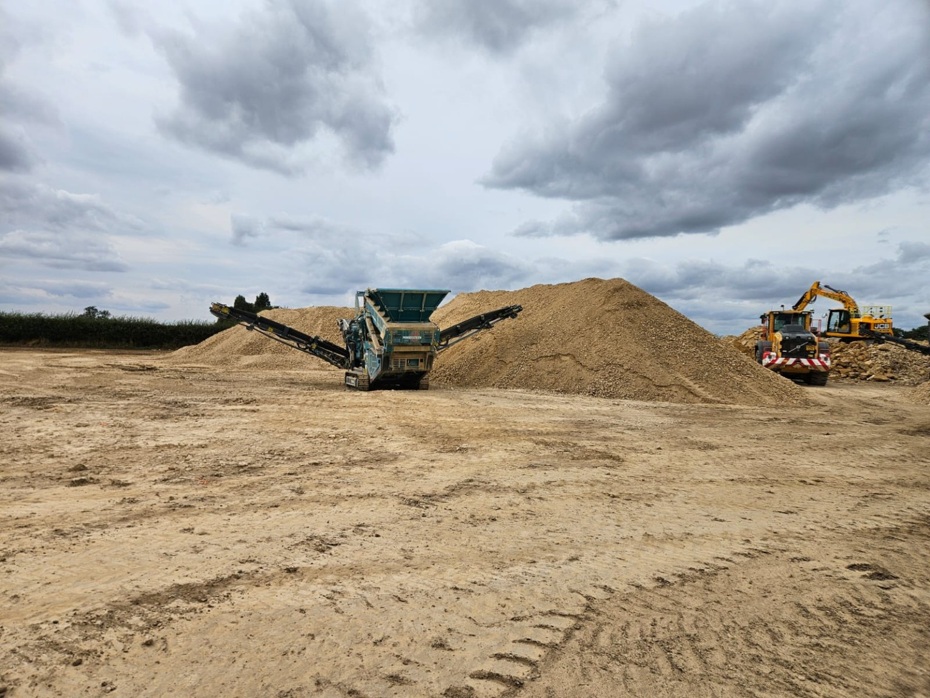
Rather than disposing of the material, the limestone was recovered and processed into fully compliant Type 1 aggregate, allowing it to be reused as a construction material.
This approach followed the principles of the circular economy by keeping materials in productive use and reducing the need to bring additional virgin aggregate into the project.
|
Outcome |
Result |
|
Excavated limestone processed |
9,200 tonnes |
|
Recovered material |
Type 1 aggregate |
|
Material cost saving |
Over £330,000 |
|
Material reused across wider projects |
Over 40,000 tonnes |
By processing and reusing material already available on the project, the initiative helped reduce reliance on virgin aggregate.
Rather than viewing excavated limestone solely as a waste stream, the project treated it as a valuable resource.
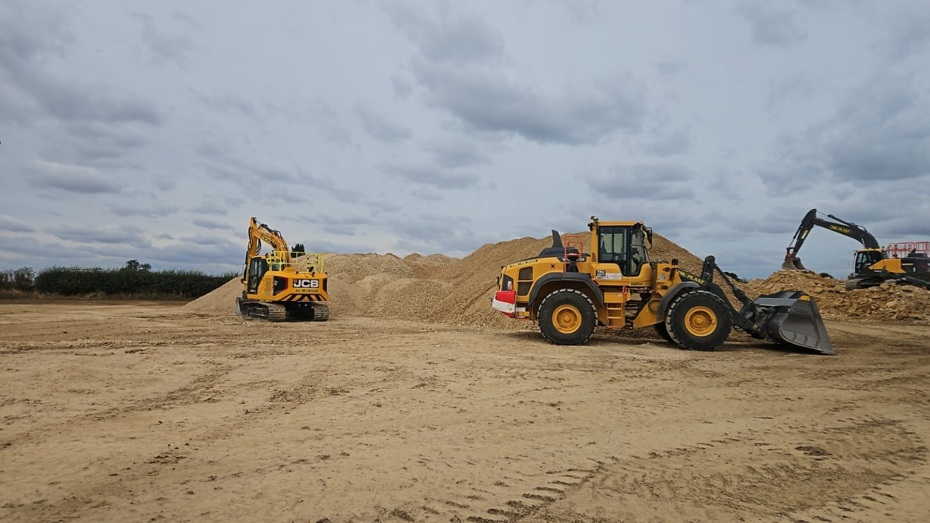
The environmental benefits were accompanied by a substantial financial saving.
The production of 9,200 tonnes of compliant Type 1 aggregate saved the project more than £330,000 in material costs.
This demonstrates that sustainability and commercial efficiency can work together rather than being competing objectives.
A key factor in the project’s success was collaboration between the different organisations and teams involved.
This collaborative approach enabled the team to challenge conventional approaches to aggregate procurement and identify opportunities for material reuse.
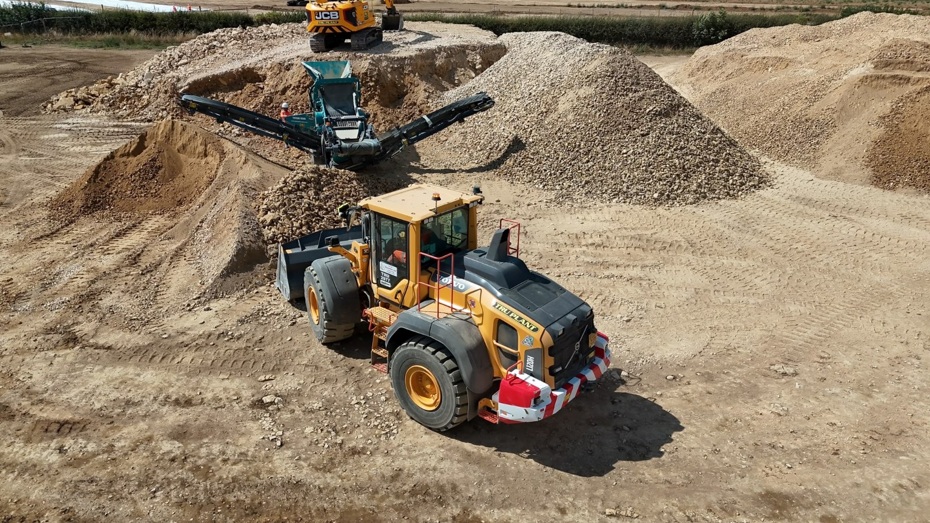
The North Hykeham project provides a practical example of the circular economy in construction.
By processing 9,200 tonnes of excavated limestone into compliant Type 1 aggregate, the team avoided the need to purchase an equivalent quantity of new material.
This was a milestone moment for Anglian water; highlighting the potential scale of resource recovery when embedded into construction practices. The collaborative approach has shown significant environmental benefits and substantial commercial savings.
“All the CAMM journey so far has only been successful to the commitment & drive of both the CAMM team and our ever dependable supply chain.
Id like to thank our AW Aggregate framework for helping us along the way,
Id also like to thank Richardsons recycling for helping us venture into the unknown in terms of reproducing materials into alternative reinstatement materials like we did on our scheme NHRR.
We have come along way in this AMP and its all credit to us all working collaboratively with our supply chain to maximise on every possibility in the world of recycling opportunities.
The site team have been nothing but positive towards the support & knowledge sharing opportunities throughout this activity.
Great collaborative effort and a huge thank you from me 😊”
-Mick Damen – Head of Reinstatement Operations & Enterprise Streetworks Assurance Anglian Water
“Collaborating with Richardson Recycling at North Hykeham has been nothing but exceptional! Their communication, drive and attitude to do the right thing for Anglian Water at North Hykeham has enabled us to achieve over £300,000 of savings by recycling on the site arisings.”
-Sam Garbutt – Construction Materials and Recycling Lead

♻️ Turning Excavated Material into Value at North Hykeham A fantastic example of resource recovery and the circular economy in action. 🏗️♻️ Working collaboratively with